explore.
build.
share.
An Expedition is at least 30 hours in which an Explorer takes a question of their own
from idea to something real — with a Guide beside them, a team around them, and
an Expo at the end where they show a room what they made, and what broke on the way.
Run as a Summer Intensive over a few weeks, or through the term in evenings and
weekends. A new one starts every month.
explore.
build.
share.
The Expedition
An Expedition is at least 30 hours of real work.
Our pilots showed that's what a project needs before it can break, get fixed, and still be finished. The hours are the promise. How they sit in the week is up to you.
Same Expedition. Two rhythms.
Summer Intensive
When school is out
- Hours
- At least 30
- Calendar
- 3 to 5 weeks
- Rhythm
- Longer sessions, most days
- Ends with
- An Expo
Term-Time Expedition
Around school and tuition
- Hours
- At least 30
- Calendar
- Evenings or weekends, flexible
- Rhythm
- Fits the week you already have
- Ends with
- An Expo
Those hours don't come out of study time. They come out of tuition that isn't working, screen time, and busy-work that was never building anything.
Explore
My own question. Plan the work. Arrive with a question, an idea, or just a spark of curiosity. Shape it into something you could actually make, and plan how. By the end, you know what you're building and why it's yours.
Build
Build it with a team. It breaks. Fix it. Go deep on your project alongside Guides and fellow Explorers. Somewhere in here it stops working — that isn't the risk of the method, it is the method. Diagnose it. Rebuild it.
Share
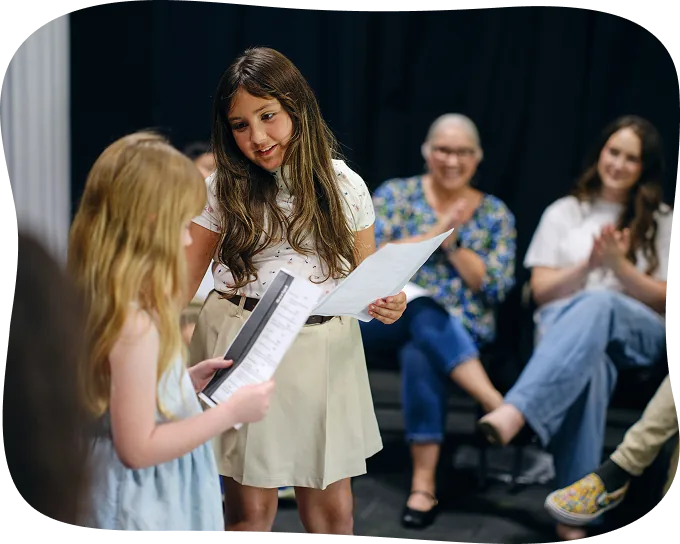
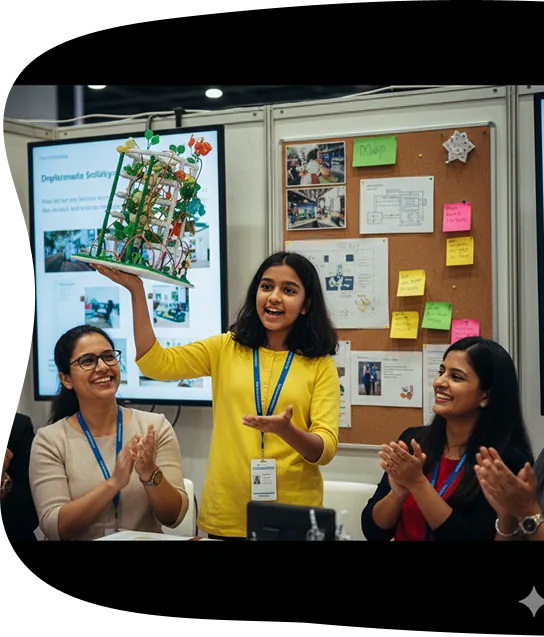
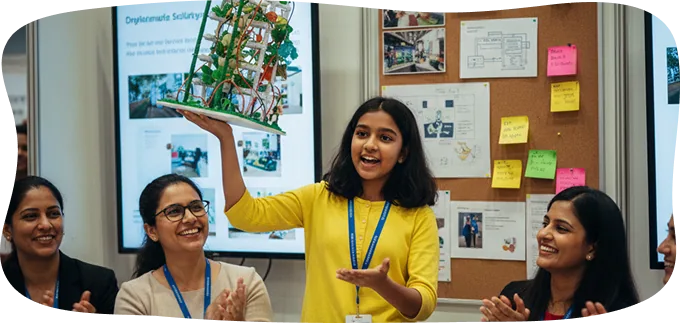
Stand up and present it. Show what you made to a room of family and community, and take their questions. Every Explorer walks away with something they built — and the story of how it broke and what they did about it.
Step four is not a setback.
Step four is the curriculum.
Ask them what broke. Every one of them has an answer.
A Typical Session
However long it runs, every session has the same shape. No lectures.
Circle up
Gather together. Share what you're working on. Ask for help. Offer ideas.


Your Map
How do you know what an Explorer learned?
Not from a test score. Not from a grade. From the work itself.
At the end of each Expedition, every Explorer has their Map:
- The project they built
- Their learning journal
- Photos and videos of the process
- Their own reflection on what they learned
This is proof of learning that actually means something — to them, to you, and to anyone they
choose
to share it with.
Your Map grows with every Expedition. A living record of who you're becoming.
What Explorers
made
Every one of these started as a question a child wanted answered. Ask them what broke.
What Explorers
and parents say
Who Makes This Happen
Guides — parents, professionals, makers, educators — volunteering their time and expertise to mentor the next generation.
Families — contributing what they can so this remains accessible to all.
The Abhyankar Foundation — providing spaces, tools, and operational support. In the US, the Foundation runs the program as a nonprofit. Fees cover costs only. No one profits.
Limited scholarships available — because a child's curiosity shouldn't depend on what their family can afford.
The Practical Stuff

Duration
At least 30 hours
Summer Intensive: 3–5 weeks. Term-Time: evenings or weekends, flexible.

Schedule
Built around your week
School-aligned timings. A new Expedition starts every month.
Ages
10–14

Group size
Up to 4 explorers in a team

What to
bring
A question, an idea, or a problem. We provide space, tools, and Guides.

Fees
Cover costs only. Scholarships available.
Common Questions
No. School gives them knowledge. Tuition strengthens it. Atelius is where they learn to apply it, on a question of their own, building something real. Keep both. We don't cover a syllabus and we don't chase marks.
That's what the first step is for — finding the question before anything gets built.
It's play with purpose — real skills through real making.
Yes — because no Expedition can be finished with what a child already knows. Every one requires learning something new, and it sticks because the project needed it. We don't cover a syllabus; we make the learning necessary.
Both thrive here. There's no single mold.
Camps entertain. Atelius empowers.
Something they made, and their Map — proof of what they learned along the way.
Write to us at join@atelius.org and one of the team members will get back to you within a day.
Where and When
Four studios — Princeton, Pune, Solapur and Bengaluru — with a new Expedition starting every month. Each one runs its own 30 hours and ends at its own Expo.
Not ready to commit? Come and see first.
This Is Just the
Beginning
Every Expedition works this way. Purpose over performance. Curiosity over compliance.
Collaboration over competition.
And one Expedition is the start, not the end. The Map grows. The questions get harder.
The Explorer walks differently into whatever comes next.
Not sure yet? Come and see first.